I've developed various punishment systems during my run developing on Java, somehow I kinda find it therapeutic as it's a simple task that can make a big difference. I've developed any including, but not limited to automatic, message-based, GUI-based and even web-based ones! For most servers, LiteBans has always been the way to go, because it's remarkably simple, easy to configure and well-set up out of the box, and has a web-based system where you can manage and view the punishments.
- IP/Geographic bans
- Account/Network vans
- Game vans (Bans for specific games on networks etc)
- Mutes
- Kicks
- Warnings
- Notes
- Stacking punishments
- Removal & reapplication of existing punishments
...and more specialised punishments:
- Bot-spam & Group bans (ability to group punish users in a certain area, sending keywords in chat, etc)
- Competitive bans (bans from specifically competitive games)
- Leaderboard bans (bans from showing on leaderboard)
- Report bans (bans from sending reports i.e Reports.io)
- Webstore bans (bans from Tebex/Buycraft ingame using Tebex API)
- Trading bans (bans from trading i.e Escrow)
- Economy bans (bans from receiving and sending money & using player shops i.e Escrow)
- Shadow mutes (mutes players silently, only they and moderators can see their messages i.e Profiling Services)
- ...and many others!
Impact on appeals
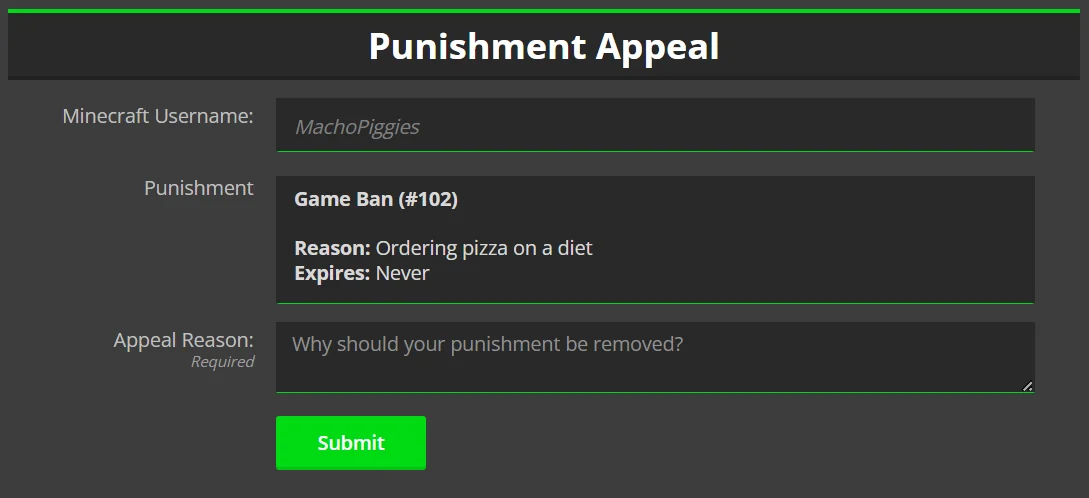
When a system is built personalised to a specific server or network, the possibilities become endless. Even with LiteBans, due to how it can store data, through your own mysql database, you can query its data from anywhere. This is the same for all my plugins. In some places where it has been installed, server owners opted to develop, or have me develop, systems to integrate their punishment system directly into the appeal system. In the case you see here, a user is linked to an appeals page in the ban message, and once they've logged in on a XenForo verified account, the system will automatically load the punishment and information directly pertaining to the punishment itself. This can include if the punishment is appealable, how long it is, the type, and if any extra information is needed to process the appeal. Some servers use a combination of automatically grabbing accounts if the logged in XenForo user has their Minecraft account linked, or attaches a small code to the ban reason for players to enter into the appeal system to appeal their punishment. Servers that tend to use the latter are often ones that rely solely on verification by ingame command.
The benefits of having systems in place to autofill this data, is so that people can't send appeals for others without permission, the appeals teams have the punishment in front of them to look at (in some places, if the ban was an automatic anticheat log, it would pull the logs into the appeal for the appeals team), and you can make sure that only appeals right for that area are being submitted, for example by blocking Discord appeals in a Game appeal area. It also is a good way of preventing appeals from punishments that cannot be appealed, preventing empty or troll submissions, or completely banning certain users from appeals.
Warden
This is what the legacy version of the punishment system Warden looked like, created for the Mutinies network. This is the view that an operator would have seen. If a user was a trial moderator, they wouldn't have seen anything above class 3, they wouldn't have seen any of the competitive, webstore, or permanent punishments for example. All of these features were designed and tailored to the needs of the network.
The Mutinies network used rules classified by 'classes' or severities, and a moderator would see a cheater, click class 1 for movement cheats, and then choose from the list of buttons in there. In each class, there was a button for each offence, for example, 'Flight', and the system would automatically work out punishment lengths, and append information about the server and ban tokens needed for appeals. Servers like the Mutinies network had their systems configured so that the more players broke rules in certain categories, the longer their next punishment would be. For example, if a player had a class 1 client punishment, it would normally be 40 days. On second offense, it would become 75 days, then 90, then be permanent. Most of the systems developed like this had stacking punishments to deter repeat offending.
Sentinien
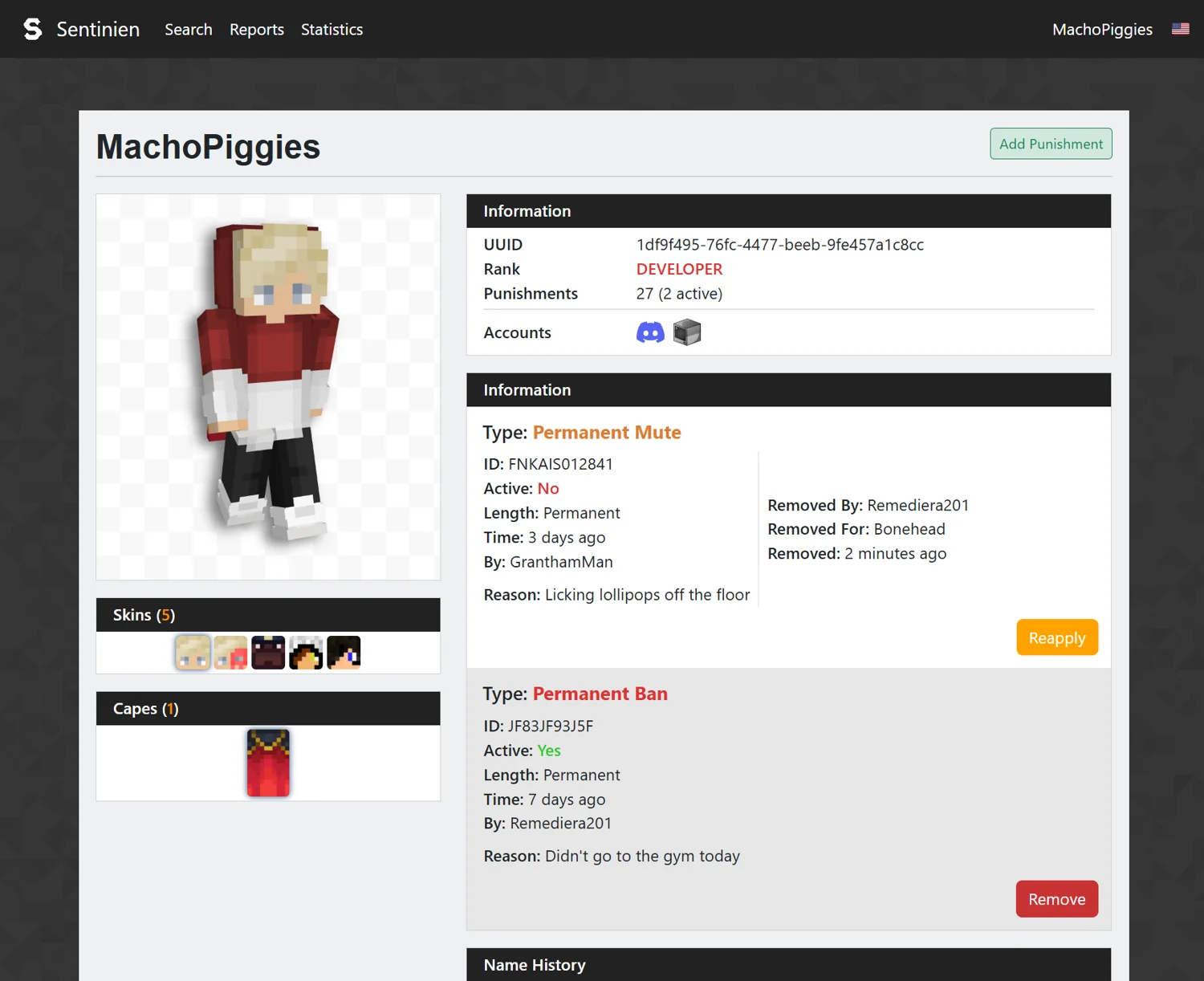
Here is a brief example of the capabilities of these web based systems. This is a mockup of an addition to an already made panel called Sentinien owned by a network I contracted for. This is image is the prototype before it was remodelled. The punishment system inside Sentinien was linked to the one in-game. You could perform Discord, XenForo & TeamSpeak punishments from it, you could add, review, remove and modify punishments, and you could view large sets of data about players like their previous names, capes, and skins which you could look at from every angle by dragging them around in the cell.
Not only could you see player information, you could also see statistics about how many people were being banned in set periods, who the most active banning staff were, and punishment reasons & types were all brought together to show staff what the most common punishment reasons were which were used to help deviate players away from committing the offense.